Frank Auerbach


Frank Auerbach (b. 1931) is a German-born British painter whose dense, fiercely worked surfaces have made him one of the most celebrated figures in postwar European art. Having arrived in Britain as a refugee in 1939, Auerbach later studied at St Martin’s School of Art and the Royal College of Art, and from 1947 became deeply embedded in the London artistic milieu. His work is distinguished by a relentless interrogation of perception: each painting emerges from repeated sittings, scraped and reworked over months, sometimes years, until the image achieves an intense psychological presence. Auerbach’s commitment to observational painting aligns him with the so‑called “School of London,” yet his approach is singular, pushing the limits of materiality and the expressive capacities of paint.
Auerbach’s early exhibitions at Beaux Arts Gallery in the 1950s introduced audiences to his sculptural handling of pigment, while major retrospectives at the Royal Academy (2001) and Tate Britain (2015) reinforced his international significance. His subjects—predominantly portraits of longtime sitters and scenes of Camden—form an extended meditation on constancy and change. Collections including Tate, the British Museum, MoMA, and the National Gallery of Art hold his works, which testify to his position as a vital chronicler of postwar urban life.
Influenced by titans such as Rembrandt, Titian, and Bomberg, Auerbach employs a relentless methodology that merges observation with memory. His drawings, often overshadowed by his paintings, reveal the underlying clarity and rigor that structure his compositions. Across his oeuvre, Auerbach challenges the viewer to confront the act of looking itself, producing works that remain among the most searching portraits of human presence in contemporary art.
-

London Art Fair 2025, January 21 - 26
Business Design Centre, 52 Upper Street, London, N1 0QH 21 - 26 Jan 2025London Art Fair, January 21 - 26 Business Design Centre, 52 Upper Street, London, N1 0QH I am delighted to be exhibiting again at the...Read more -

British Art Fair 2024
September 26-29: Saatchi Gallery, London 26 - 29 Sep 2024Saatchi Gallery, Kings Road, London, SW3 4RY I am delighted to be exhibiting again at the British Art Fair, on the same stand (21 )...Read more -
London Original Print Fair 2024, March 21 - 24
21 - 24 Mar 2024London Original Print Fair, March 21 - 24 Stand W7, West Wing, Somerset House , Strand, London, WC2R 1LA I am delighted to be exhibiting...Read more -

Extended: Present - Past at Brun Fine Art
February 1 - 29 by appointment only 1 - 29 Feb 2024Present - Past at Brun Fine Art 38 Old Bond St, London W1S 4QW Nox extended, with some new artworks on display. February 1-29 by...Read more -

London Art Fair 2024
17 - 21 Jan 2024I am delighted to be back exhibiting at the 2024 London Art Fair . 'We believe that great art provides a lens to see the...Read more -

Present - Past, Group Show at Brun Fine Art London
9 - 26 Jan 2024Present - Past at Brun Fine Art 38 Old Bond St, London W1S 4QW December 6 – 22; January 9 - 26 Tuesday to Friday,...Read more -
British Art Fair 2023
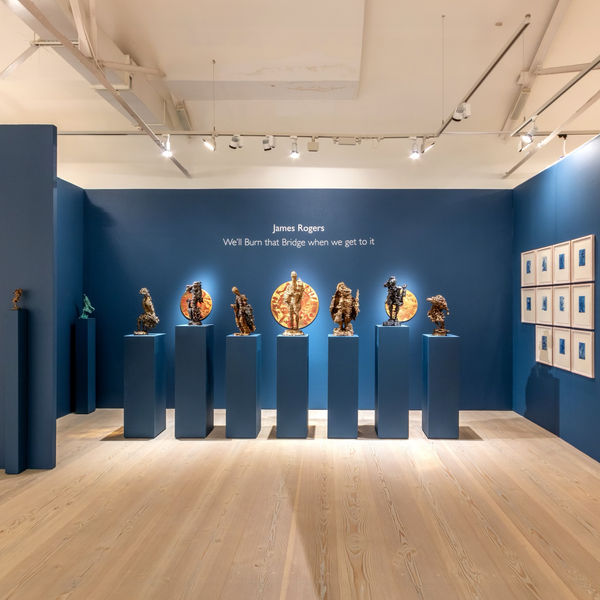
British Art Fair, Saatchi Gallery, Kings Road, London, SW3 4RY 28 Sep - 1 Oct 2023British Art Fair, September 28 - October 1 Saatchi Gallery, Kings Road, London, SW3 4RY I am delighted to be exhibiting again at the British...Read more -

British Art Fair 2022
British Art Fair, Saatchi Gallery, Sep 29 - Oct 2 29 Sep - 2 Oct 2022I am delighted to be exhibiting for the first time at the British Art Fair at the Saatchi Gallery this September/October. I will be on...Read more -

London Original Print Fair 2022
W6, West Wing, Somerset House 26 - 29 May 2022I am delighted to be exhibiting at the 37th edition of the London Original Print Fair in its new location at Somerset House . I...Read more -
Prints & Fairy Tales: Austin / Desmond Fine Art & Julian Page, May 11-21
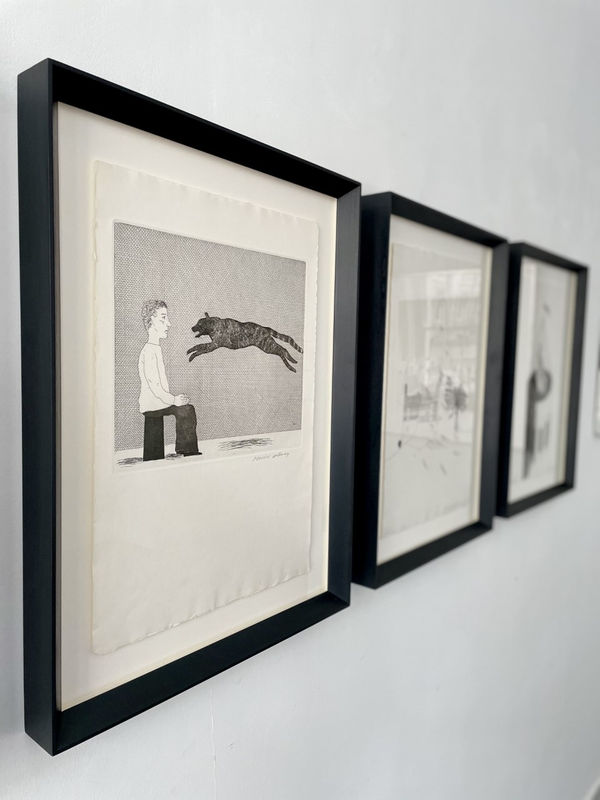
11 - 21 May 2021We will be extending our current exhibition Prints and Fairy Tales until 21 May. Curated in partnership with Austin Desmond, the show features a selection...Read more