Paula Rego
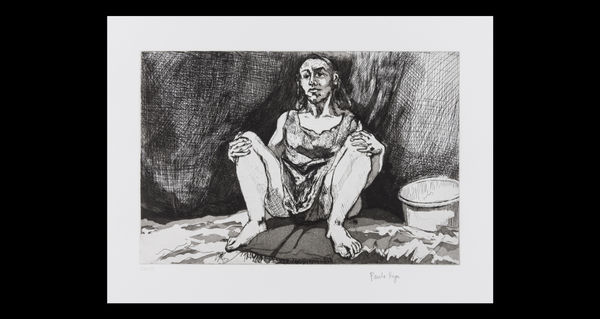

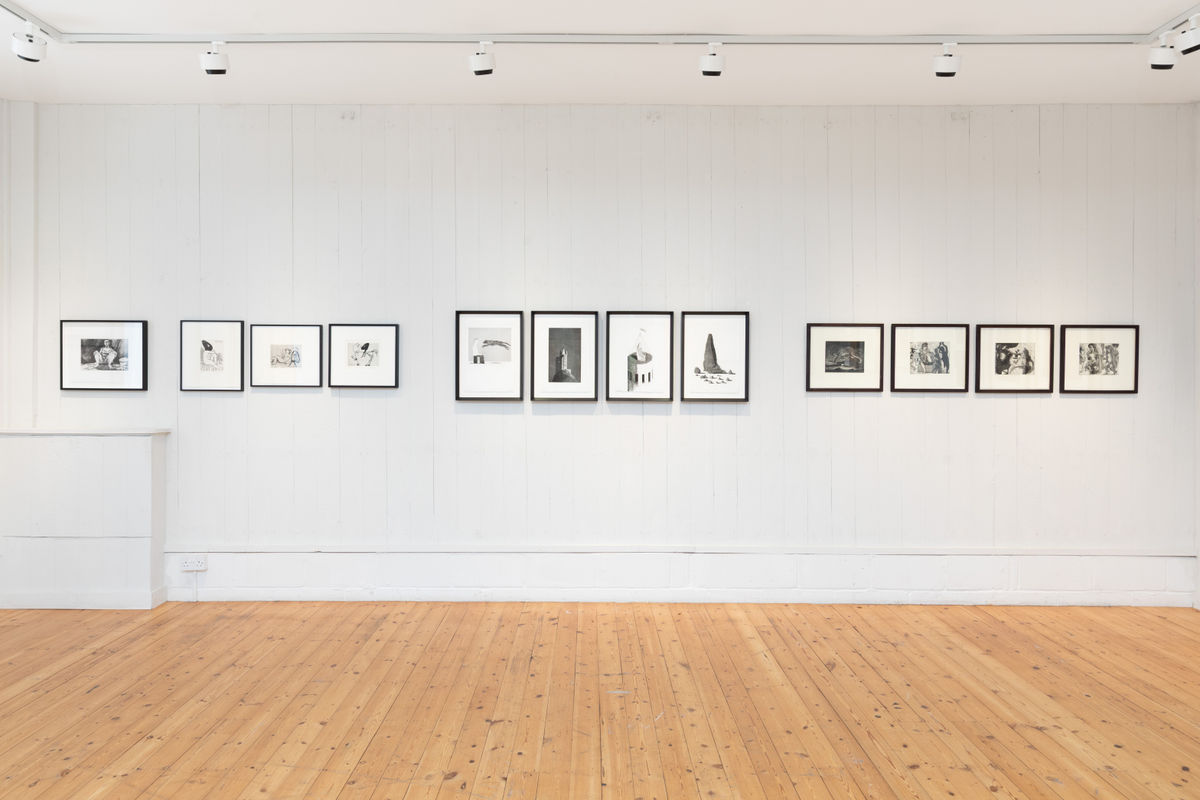

Paula Rego (1935-2022) is one of the most powerful and original figurative painters and printmakers of the late 20th and early 21st centuries, a storyteller whose work channels mythology, fairy tale, personal memory and political critique into images of haunting psychological force. Born in Lisbon in 1935, Rego came of age during Portugal’s authoritarian Estado Novo regime — a background that would deeply inform her later themes of oppression, repression, gender, and power.
Rego studied at the Slade School of Fine Art in London, where she was exposed to contemporary figurative traditions and began her lifelong exploration of painting and print. Her early career was shaped both by European modernism and by her own roots in Portuguese culture, folklore, and storytelling. In 1962 she began exhibiting with the The London Group, a milieu that included emerging British artists of her generation.
In 1965 she was selected for a group show at the Institute of Contemporary Arts (ICA) in London — signalling her arrival on the British art scene — and later that year she had her first solo show in Lisbon. Over subsequent decades, she developed a distinctive visual language: richly composed paintings and pastels populated by figures — often women or children — in stages of symbolic, psychological, or fairy-tale-like drama.
Rego’s work frequently draws on folk narratives, Catholic imagery, feminist concerns, and the grotesque poetry of myth, producing scenes that are at once intimate and allegorical, domestic and archetypal. Her imagery grapples with trauma, power, sexuality, birth, and social injustice. She transforms the personal into the political, the familiar into the unsettling. This narrative urgency and moral force set her apart from many contemporaries focused solely on formal or aesthetic concerns.
Her printmaking — especially pastel and lithograph — complements her painting, allowing for series work and repetition, which she used to interrogate themes from multiple angles. Through her long career, Rego remained committed to figuration, psychological depth, and narrative complexity. Her works were exhibited widely in Portugal, UK, and internationally from the 1960s onward, including a major retrospective at Tate Britain (2021).
Rego’s legacy lies in her fearless confrontation of social, political, and gender-based inequities, and in her ability to transform painting into a medium of testimony, memory, and resistance. Her images — lyrical, disturbing, intimate, and grand — continue to shape dialogues about identity, power, and representation.
-

London Art Fair 2026, January 20 - 25
20 - 25 Jan 2026Stand 39, Mezzanine London Art Fair, January 20 - 25 Business Design Centre, 52 Upper Street, London, N1 0QH I am delighted to be exhibiting...Read more -
London Original Print Fair 2025, March 20 - 23
16 - 24 Mar 2025Booth W7 London Original Print Fair Somerset House, London, WC2R 1LA 19 March: Private View (by invitation only) 20 – 23 March: Open to the...Read more -

London Art Fair 2025, January 21 - 26
Business Design Centre, 52 Upper Street, London, N1 0QH 21 - 26 Jan 2025London Art Fair, January 21 - 26 Business Design Centre, 52 Upper Street, London, N1 0QH I am delighted to be exhibiting again at the...Read more -

British Art Fair 2024
September 26-29: Saatchi Gallery, London 26 - 29 Sep 2024Saatchi Gallery, Kings Road, London, SW3 4RY I am delighted to be exhibiting again at the British Art Fair, on the same stand (21 )...Read more -
London Original Print Fair 2024, March 21 - 24
21 - 24 Mar 2024London Original Print Fair, March 21 - 24 Stand W7, West Wing, Somerset House , Strand, London, WC2R 1LA I am delighted to be exhibiting...Read more -

Extended: Present - Past at Brun Fine Art
February 1 - 29 by appointment only 1 - 29 Feb 2024Present - Past at Brun Fine Art 38 Old Bond St, London W1S 4QW Nox extended, with some new artworks on display. February 1-29 by...Read more -

London Art Fair 2024
17 - 21 Jan 2024I am delighted to be back exhibiting at the 2024 London Art Fair . 'We believe that great art provides a lens to see the...Read more -

Present - Past, Group Show at Brun Fine Art London
9 - 26 Jan 2024Present - Past at Brun Fine Art 38 Old Bond St, London W1S 4QW December 6 – 22; January 9 - 26 Tuesday to Friday,...Read more