Lucian Freud
Works


Exhibitions
Biography

Blond Girl, 1985
Lucian Freud (1922–2011) was one of the most influential figurative painters of the 20th century, renowned for his unflinching depictions of the human body and his rigorous exploration of psychological presence. Born in Berlin and arriving in Britain as a refugee in 1933, Freud studied at the Central School of Art and the East Anglian School of Painting and Drawing. His early works of the 1940s and 1950s display a precise, linear style, but by the 1960s he shifted toward a thicker, more sculptural handling of paint that would define his mature idiom.
Freud’s intense portrait sessions—often involving family members, friends, or habitual sitters—could extend over months, producing works such as *Benefits Supervisor Sleeping* (1995) and *Reflection (Self-Portrait)* (1985). His technique, characterized by incremental, scrutinizing brushstrokes and a muted palette, creates surfaces that seem both corporeal and vulnerable. Freud rejected idealization, instead embracing the physicality, weight, and presence of the human form.
Exhibitions at the Whitechapel Gallery (1954), Hayward Gallery (1974), and major retrospectives at Tate Britain (2002) and the Met (2022) have cemented his legacy. His works are widely held in public collections, including the Tate, the National Portrait Gallery, and MoMA. Often grouped with the “School of London,” Freud stands apart for his uncompromising focus on the human figure and the intimate, sometimes unsettling truthfulness of his vision. His oeuvre remains a cornerstone of postwar British painting.
Freud’s intense portrait sessions—often involving family members, friends, or habitual sitters—could extend over months, producing works such as *Benefits Supervisor Sleeping* (1995) and *Reflection (Self-Portrait)* (1985). His technique, characterized by incremental, scrutinizing brushstrokes and a muted palette, creates surfaces that seem both corporeal and vulnerable. Freud rejected idealization, instead embracing the physicality, weight, and presence of the human form.
Exhibitions at the Whitechapel Gallery (1954), Hayward Gallery (1974), and major retrospectives at Tate Britain (2002) and the Met (2022) have cemented his legacy. His works are widely held in public collections, including the Tate, the National Portrait Gallery, and MoMA. Often grouped with the “School of London,” Freud stands apart for his uncompromising focus on the human figure and the intimate, sometimes unsettling truthfulness of his vision. His oeuvre remains a cornerstone of postwar British painting.
Events
-

London Art Fair 2026, January 20 - 25
20 - 25 Jan 2026Stand 39, Mezzanine London Art Fair, January 20 - 25 Business Design Centre, 52 Upper Street, London, N1 0QH I am delighted to be exhibiting...Read more -
London Original Print Fair 2025, March 20 - 23
16 - 24 Mar 2025Booth W7 London Original Print Fair Somerset House, London, WC2R 1LA 19 March: Private View (by invitation only) 20 – 23 March: Open to the...Read more -

London Art Fair 2025, January 21 - 26
Business Design Centre, 52 Upper Street, London, N1 0QH 21 - 26 Jan 2025London Art Fair, January 21 - 26 Business Design Centre, 52 Upper Street, London, N1 0QH I am delighted to be exhibiting again at the...Read more -

British Art Fair 2024
September 26-29: Saatchi Gallery, London 26 - 29 Sep 2024Saatchi Gallery, Kings Road, London, SW3 4RY I am delighted to be exhibiting again at the British Art Fair, on the same stand (21 )...Read more -
Eye of the Collector 2024, June 26-29
The Garrison Chapel, Chelsea Barracks, London, SW1W 8BG 26 - 29 Jun 2024I am delighted to be exhibiting for the first time at Eye of the Collector next month in its new location: The Garrison Chapel, Chelsea...Read more -
London Original Print Fair 2024, March 21 - 24
21 - 24 Mar 2024London Original Print Fair, March 21 - 24 Stand W7, West Wing, Somerset House , Strand, London, WC2R 1LA I am delighted to be exhibiting...Read more -

Extended: Present - Past at Brun Fine Art
February 1 - 29 by appointment only 1 - 29 Feb 2024Present - Past at Brun Fine Art 38 Old Bond St, London W1S 4QW Nox extended, with some new artworks on display. February 1-29 by...Read more -

London Art Fair 2024
17 - 21 Jan 2024I am delighted to be back exhibiting at the 2024 London Art Fair . 'We believe that great art provides a lens to see the...Read more -

Present - Past, Group Show at Brun Fine Art London
9 - 26 Jan 2024Present - Past at Brun Fine Art 38 Old Bond St, London W1S 4QW December 6 – 22; January 9 - 26 Tuesday to Friday,...Read more -
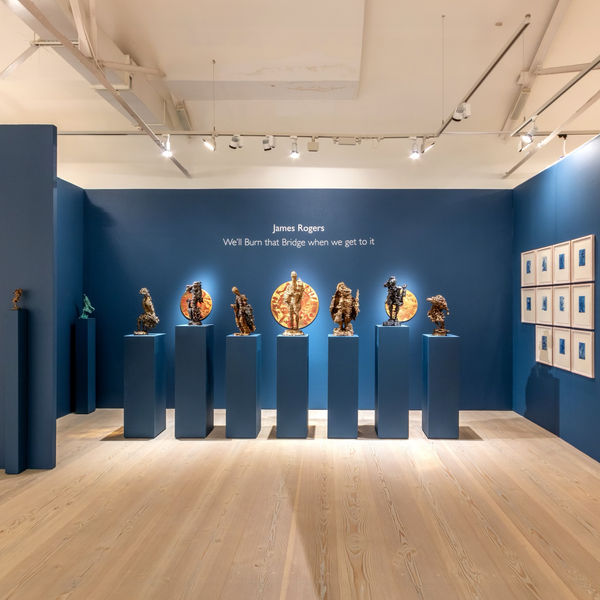
British Art Fair 2023
British Art Fair, Saatchi Gallery, Kings Road, London, SW3 4RY 28 Sep - 1 Oct 2023British Art Fair, September 28 - October 1 Saatchi Gallery, Kings Road, London, SW3 4RY I am delighted to be exhibiting again at the British...Read more -

British Art Fair 2022
British Art Fair, Saatchi Gallery, Sep 29 - Oct 2 29 Sep - 2 Oct 2022I am delighted to be exhibiting for the first time at the British Art Fair at the Saatchi Gallery this September/October. I will be on...Read more -

London Original Print Fair 2022
W6, West Wing, Somerset House 26 - 29 May 2022I am delighted to be exhibiting at the 37th edition of the London Original Print Fair in its new location at Somerset House . I...Read more -
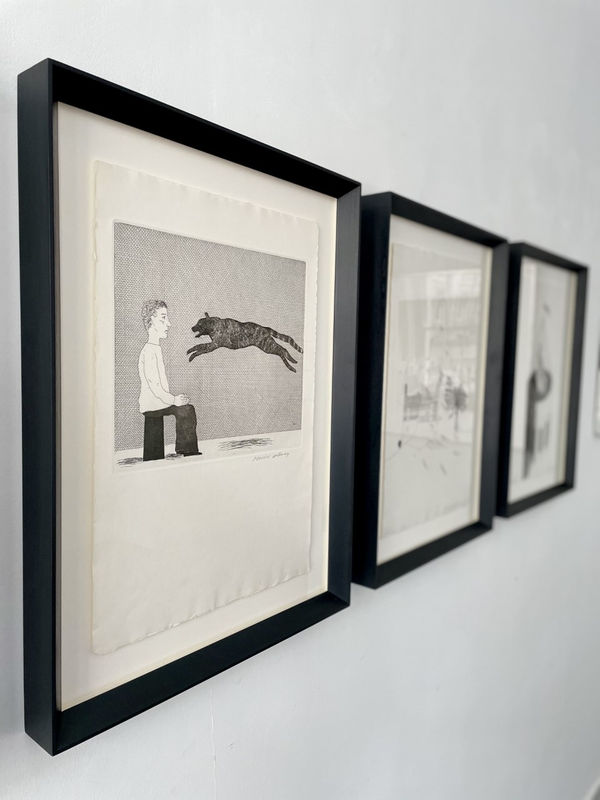
Prints & Fairy Tales: Austin / Desmond Fine Art & Julian Page, May 11-21
11 - 21 May 2021We will be extending our current exhibition Prints and Fairy Tales until 21 May. Curated in partnership with Austin Desmond, the show features a selection...Read more