Richard Hamilton
Works


Exhibitions
Biography

The Beatles, 2007
Richard Hamilton (1922–2011) was a pioneering figure of British Pop Art whose influence on postwar visual culture is profound. Trained at the Royal Academy Schools and later the Slade School of Fine Art, Hamilton emerged in the 1950s as a key member of the Independent Group, whose discussions on mass media, advertising, and technology helped shape the conceptual foundations of Pop. His seminal collage *Just what is it that makes today’s homes so different, so appealing?* (1956) is often cited as one of the earliest works of the movement.
Hamilton’s practice spanned painting, printmaking, photography, installation, and political art. His works frequently examine the aesthetics of consumerism and the interplay between high and low culture, incorporating imagery from household appliances, Hollywood icons, and contemporary politics. His technical innovation was equally notable: he embraced new printing technologies, digital methods, and industrial materials long before they became common in contemporary art.
Major exhibitions include retrospectives at Tate Modern (2014) and the Museo Reina Sofía (2010), and his works are held in MoMA, Tate, the Centre Pompidou, and countless international collections. Hamilton also collaborated with figures like Marcel Duchamp, producing a definitive reconstruction of Duchamp’s *The Large Glass*. His art remains intellectually agile, socially engaged, and foundational to the development of conceptual and media-driven practices in the late 20th century.
Hamilton’s practice spanned painting, printmaking, photography, installation, and political art. His works frequently examine the aesthetics of consumerism and the interplay between high and low culture, incorporating imagery from household appliances, Hollywood icons, and contemporary politics. His technical innovation was equally notable: he embraced new printing technologies, digital methods, and industrial materials long before they became common in contemporary art.
Major exhibitions include retrospectives at Tate Modern (2014) and the Museo Reina Sofía (2010), and his works are held in MoMA, Tate, the Centre Pompidou, and countless international collections. Hamilton also collaborated with figures like Marcel Duchamp, producing a definitive reconstruction of Duchamp’s *The Large Glass*. His art remains intellectually agile, socially engaged, and foundational to the development of conceptual and media-driven practices in the late 20th century.
Events
-

London Art Fair 2026, January 20 - 25
20 - 25 Jan 2026Stand 39, Mezzanine London Art Fair, January 20 - 25 Business Design Centre, 52 Upper Street, London, N1 0QH I am delighted to be exhibiting...Read more -
London Original Print Fair 2025, March 20 - 23
16 - 24 Mar 2025Booth W7 London Original Print Fair Somerset House, London, WC2R 1LA 19 March: Private View (by invitation only) 20 – 23 March: Open to the...Read more -

London Art Fair 2025, January 21 - 26
Business Design Centre, 52 Upper Street, London, N1 0QH 21 - 26 Jan 2025London Art Fair, January 21 - 26 Business Design Centre, 52 Upper Street, London, N1 0QH I am delighted to be exhibiting again at the...Read more -

British Art Fair 2024
September 26-29: Saatchi Gallery, London 26 - 29 Sep 2024Saatchi Gallery, Kings Road, London, SW3 4RY I am delighted to be exhibiting again at the British Art Fair, on the same stand (21 )...Read more -
London Original Print Fair 2024, March 21 - 24
21 - 24 Mar 2024London Original Print Fair, March 21 - 24 Stand W7, West Wing, Somerset House , Strand, London, WC2R 1LA I am delighted to be exhibiting...Read more -

Extended: Present - Past at Brun Fine Art
February 1 - 29 by appointment only 1 - 29 Feb 2024Present - Past at Brun Fine Art 38 Old Bond St, London W1S 4QW Nox extended, with some new artworks on display. February 1-29 by...Read more -

London Art Fair 2024
17 - 21 Jan 2024I am delighted to be back exhibiting at the 2024 London Art Fair . 'We believe that great art provides a lens to see the...Read more -

Present - Past, Group Show at Brun Fine Art London
9 - 26 Jan 2024Present - Past at Brun Fine Art 38 Old Bond St, London W1S 4QW December 6 – 22; January 9 - 26 Tuesday to Friday,...Read more -
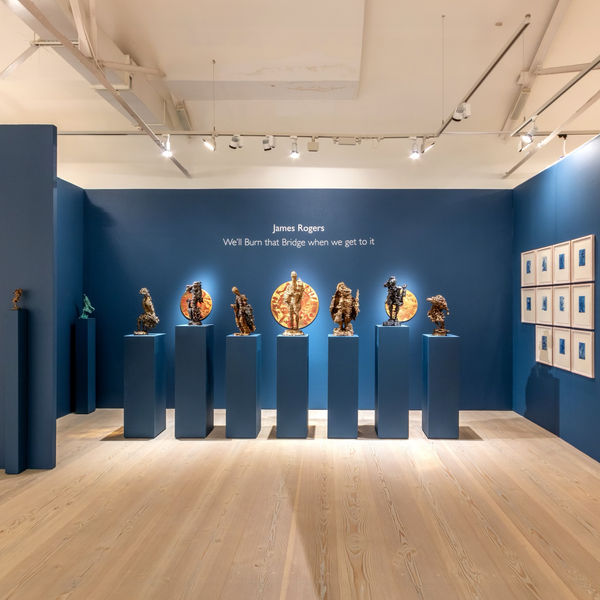
British Art Fair 2023
British Art Fair, Saatchi Gallery, Kings Road, London, SW3 4RY 28 Sep - 1 Oct 2023British Art Fair, September 28 - October 1 Saatchi Gallery, Kings Road, London, SW3 4RY I am delighted to be exhibiting again at the British...Read more -

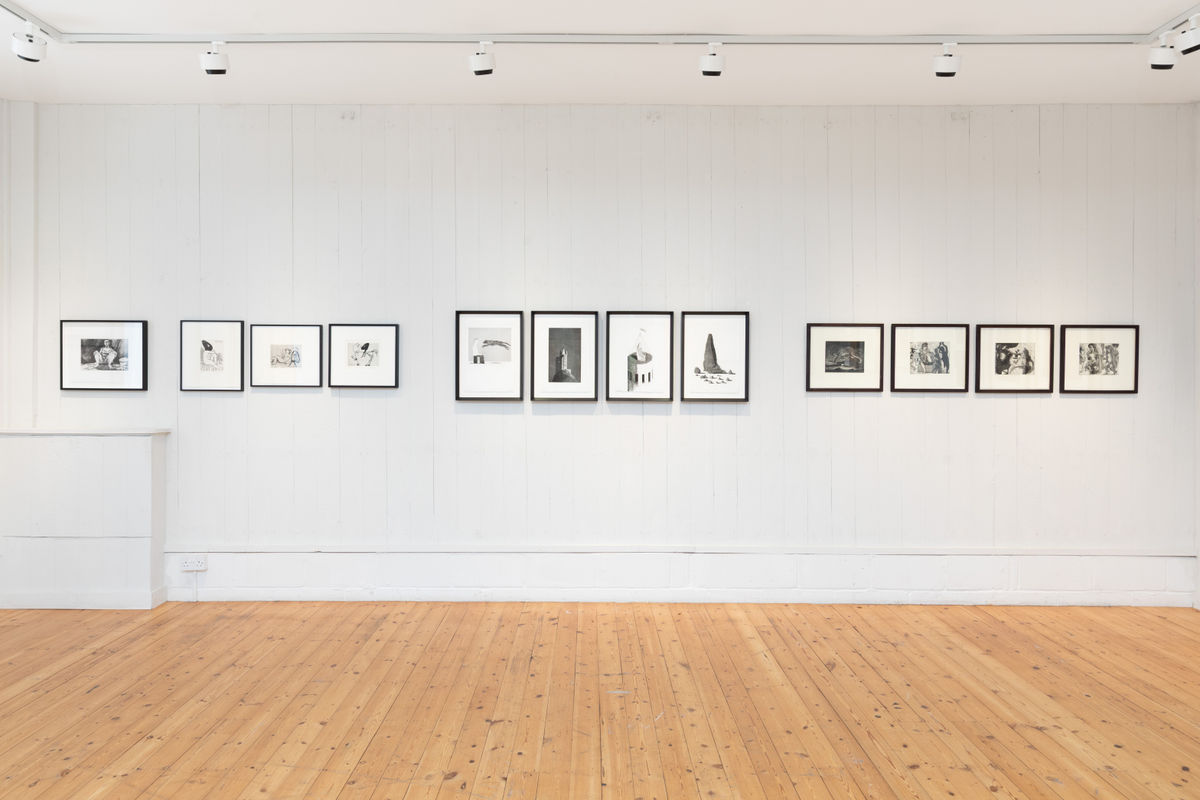
Richard Hamilton: Prints
Picasso's Meninas and Graphic Work, (1949) - 2007 6 - 29 Sep 2023In celebration of the 50th anniversary of Richard Hamilton's graphic masterpiece, Picasso's Meninas, Julian Page, in association with Austin Desmond Fine Art, is pleased to...Read more -
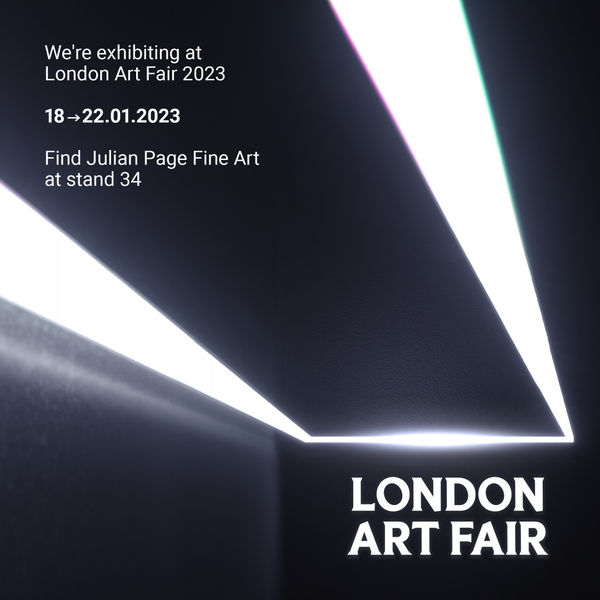
London Art Fair 2023
17 - 22 Jan 2023I am delighted to be back exhibiting at the 2022 London Art Fair . 'We believe that great art provides a lens to see the...Read more -

British Art Fair 2022
British Art Fair, Saatchi Gallery, Sep 29 - Oct 2 29 Sep - 2 Oct 2022I am delighted to be exhibiting for the first time at the British Art Fair at the Saatchi Gallery this September/October. I will be on...Read more -

London Original Print Fair 2022
W6, West Wing, Somerset House 26 - 29 May 2022I am delighted to be exhibiting at the 37th edition of the London Original Print Fair in its new location at Somerset House . I...Read more -

London Art Fair 2022
21 - 24 Apr 2022I am delighted to be back exhibiting at the 2022 London Art Fair . 'We believe that great art provides a lens to see the...Read more -
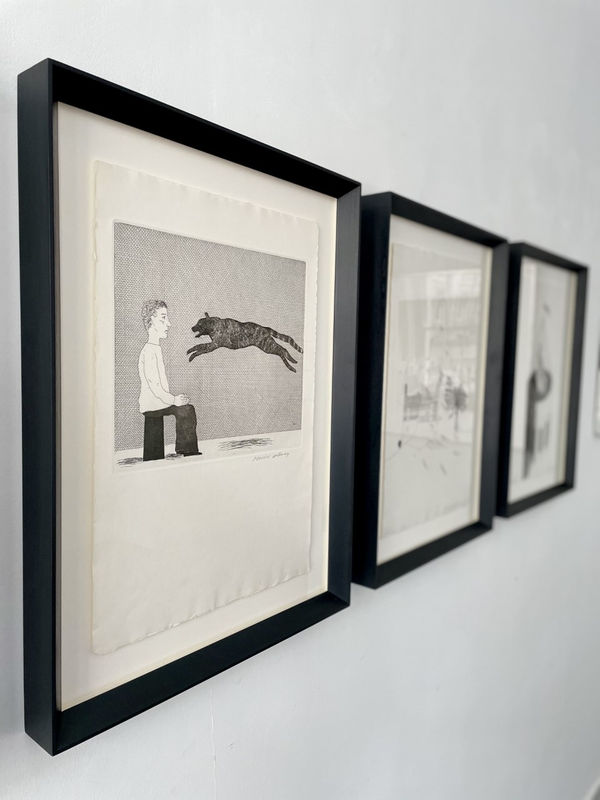
Prints & Fairy Tales: Austin / Desmond Fine Art & Julian Page, May 11-21
11 - 21 May 2021We will be extending our current exhibition Prints and Fairy Tales until 21 May. Curated in partnership with Austin Desmond, the show features a selection...Read more