Louise Bourgeois
Works


Exhibitions
Biography

Merci Mercy, 1992
Louise Bourgeois (1911–2010) stands as one of the defining artists of the 20th and early 21st centuries, whose psychologically charged sculptures, installations, and drawings probe themes of memory, trauma, and the body. Born in Paris and later working in New York, Bourgeois drew much of her artistic vocabulary from her childhood experiences, particularly her family’s tapestry restoration workshop. This early environment instilled motifs of repair, rupture, and emotional complexity that would resonate across her long career.
Bourgeois’s “Personages” of the late 1940s signaled her entrance into postwar sculptural discourse, and successive decades saw her continually reinvent form and material—working in wood, latex, marble, fabric, and bronze. Her monumental spider sculptures, including *Maman* (1999), have become emblematic of her practice, embodying themes of protection, vulnerability, and maternal ambivalence. Major retrospectives at the MoMA (1982) and Tate Modern (2007) cemented her legacy, while her influence extends across generations of contemporary artists exploring identity, embodiment, and narrative.
Collections worldwide—including the Centre Pompidou, Guggenheim, MoMA, and the National Gallery of Art—hold her works. Bourgeois’s intimate drawings and writings, often diaristic in nature, reveal the psychological engine that drives her practice. Drawing from Surrealism, feminism, and psychoanalysis while belonging fully to none, Bourgeois forged a fiercely individual vision in which sculpture becomes a site of emotional excavation. Her oeuvre continues to challenge and expand the language of contemporary art.
Bourgeois’s “Personages” of the late 1940s signaled her entrance into postwar sculptural discourse, and successive decades saw her continually reinvent form and material—working in wood, latex, marble, fabric, and bronze. Her monumental spider sculptures, including *Maman* (1999), have become emblematic of her practice, embodying themes of protection, vulnerability, and maternal ambivalence. Major retrospectives at the MoMA (1982) and Tate Modern (2007) cemented her legacy, while her influence extends across generations of contemporary artists exploring identity, embodiment, and narrative.
Collections worldwide—including the Centre Pompidou, Guggenheim, MoMA, and the National Gallery of Art—hold her works. Bourgeois’s intimate drawings and writings, often diaristic in nature, reveal the psychological engine that drives her practice. Drawing from Surrealism, feminism, and psychoanalysis while belonging fully to none, Bourgeois forged a fiercely individual vision in which sculpture becomes a site of emotional excavation. Her oeuvre continues to challenge and expand the language of contemporary art.
Events
-
London Original Print Fair 2025, March 20 - 23
16 - 24 Mar 2025Booth W7 London Original Print Fair Somerset House, London, WC2R 1LA 19 March: Private View (by invitation only) 20 – 23 March: Open to the...Read more -

London Art Fair 2025, January 21 - 26
Business Design Centre, 52 Upper Street, London, N1 0QH 21 - 26 Jan 2025London Art Fair, January 21 - 26 Business Design Centre, 52 Upper Street, London, N1 0QH I am delighted to be exhibiting again at the...Read more -
London Original Print Fair 2024, March 21 - 24
21 - 24 Mar 2024London Original Print Fair, March 21 - 24 Stand W7, West Wing, Somerset House , Strand, London, WC2R 1LA I am delighted to be exhibiting...Read more -

Extended: Present - Past at Brun Fine Art
February 1 - 29 by appointment only 1 - 29 Feb 2024Present - Past at Brun Fine Art 38 Old Bond St, London W1S 4QW Nox extended, with some new artworks on display. February 1-29 by...Read more -

London Art Fair 2024
17 - 21 Jan 2024I am delighted to be back exhibiting at the 2024 London Art Fair . 'We believe that great art provides a lens to see the...Read more -

Present - Past, Group Show at Brun Fine Art London
9 - 26 Jan 2024Present - Past at Brun Fine Art 38 Old Bond St, London W1S 4QW December 6 – 22; January 9 - 26 Tuesday to Friday,...Read more -

London Original Print Fair 2022
W6, West Wing, Somerset House 26 - 29 May 2022I am delighted to be exhibiting at the 37th edition of the London Original Print Fair in its new location at Somerset House . I...Read more -
Prints & Fairy Tales: Austin / Desmond Fine Art & Julian Page, May 11-21
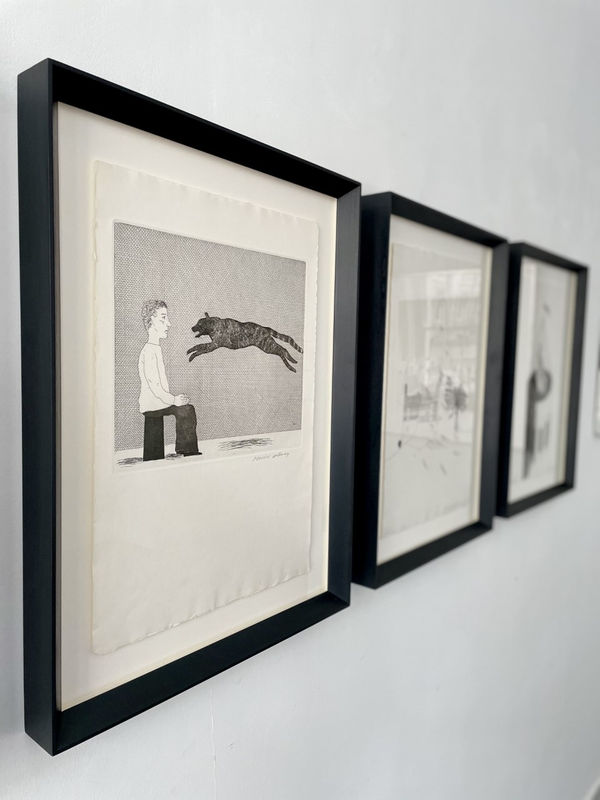
11 - 21 May 2021We will be extending our current exhibition Prints and Fairy Tales until 21 May. Curated in partnership with Austin Desmond, the show features a selection...Read more