Bridget Riley


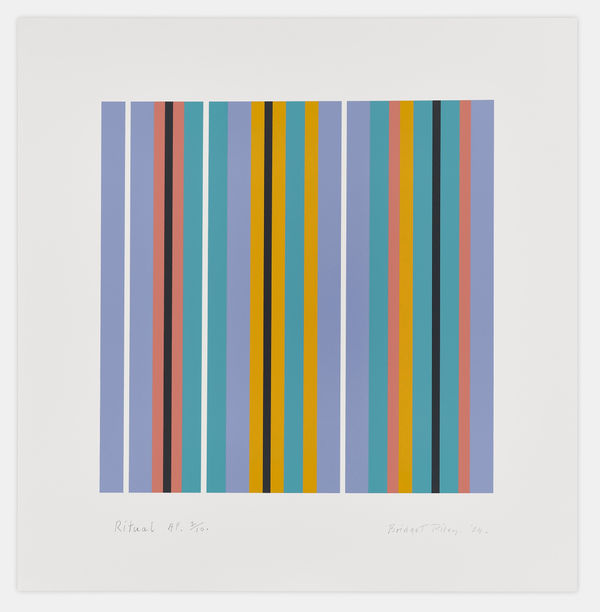


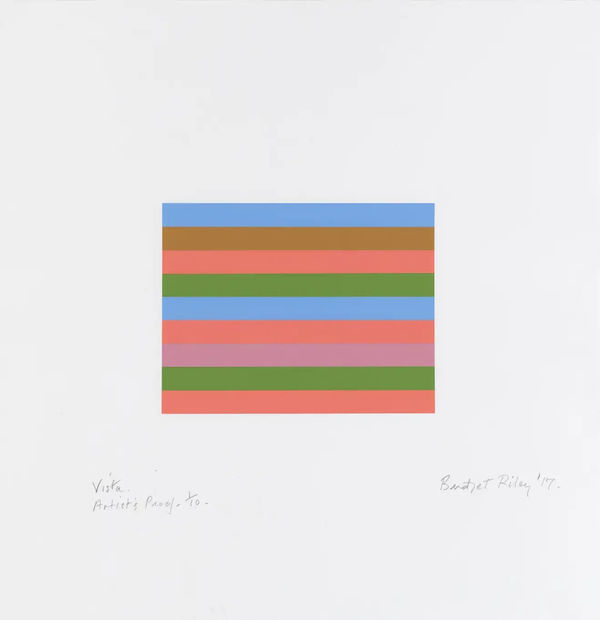


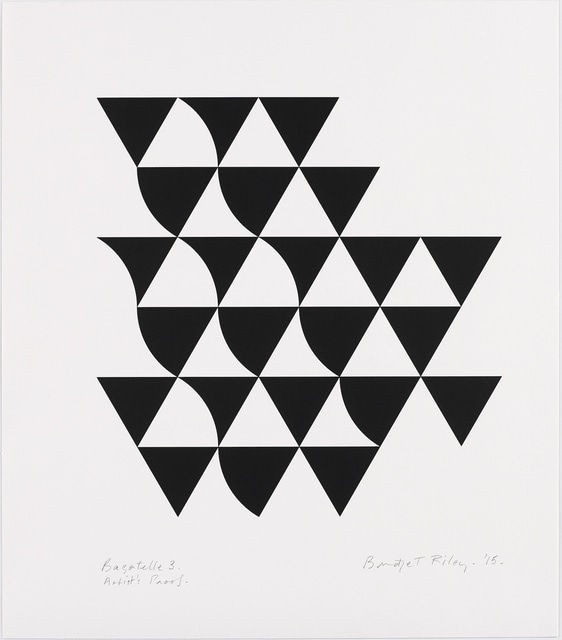


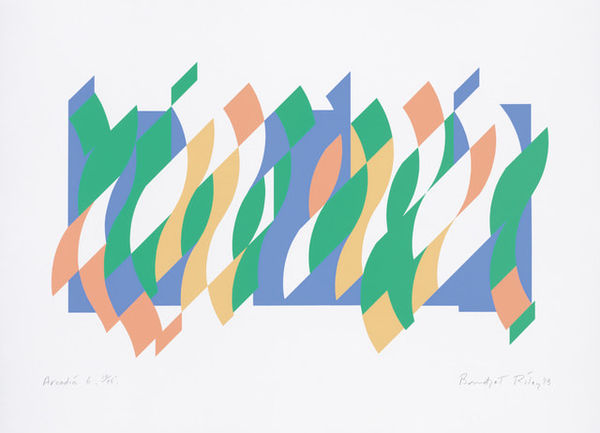


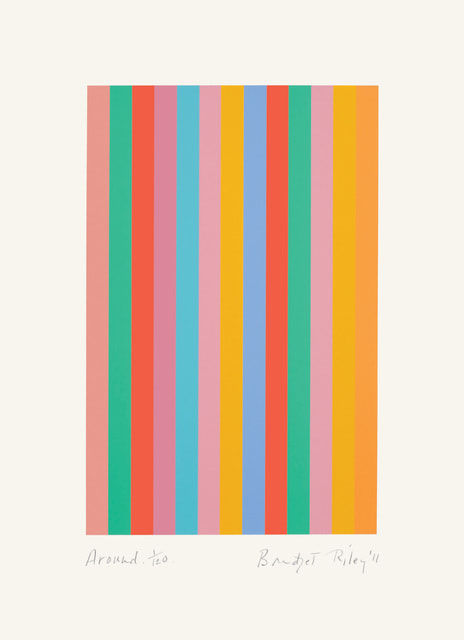

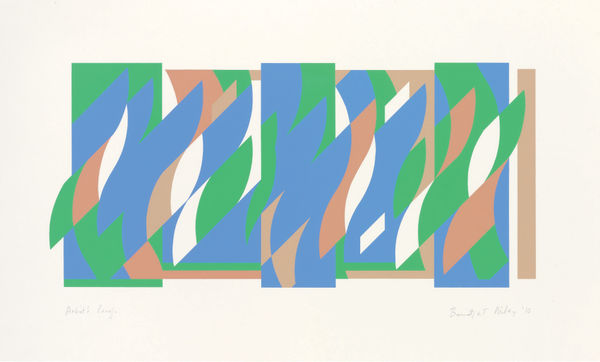

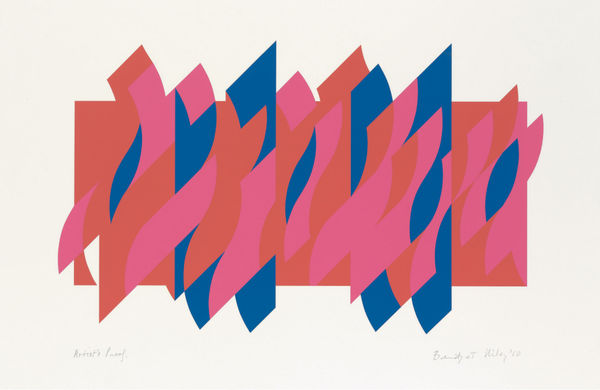
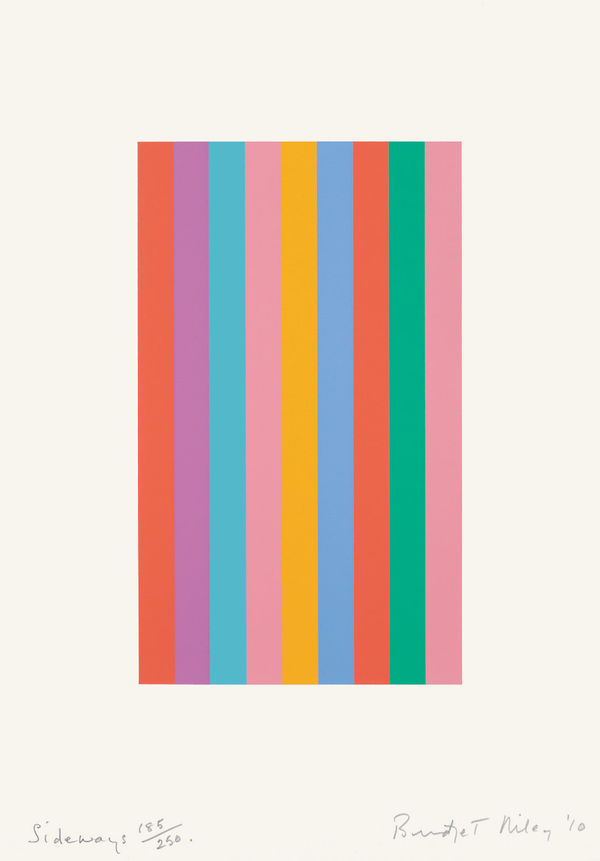


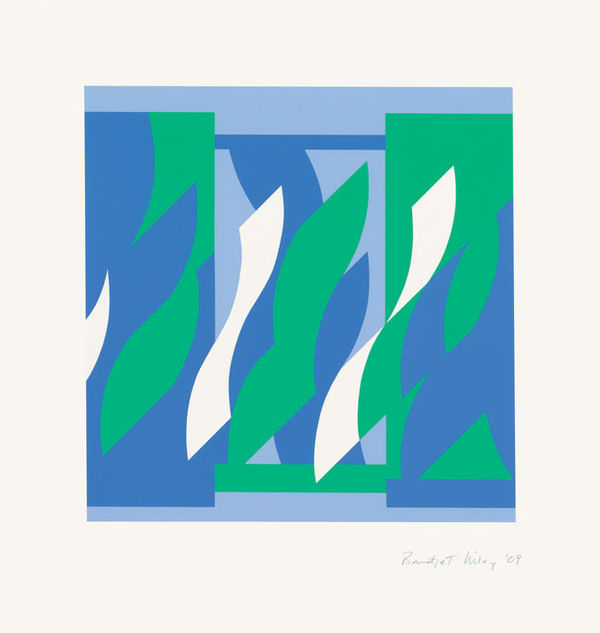
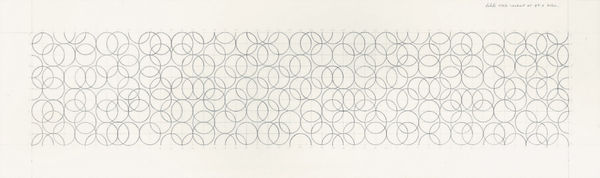


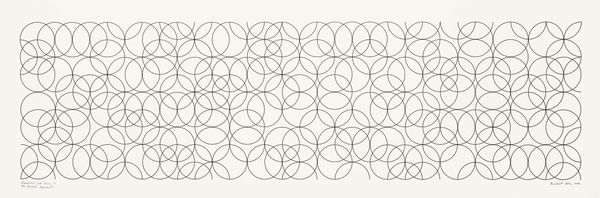
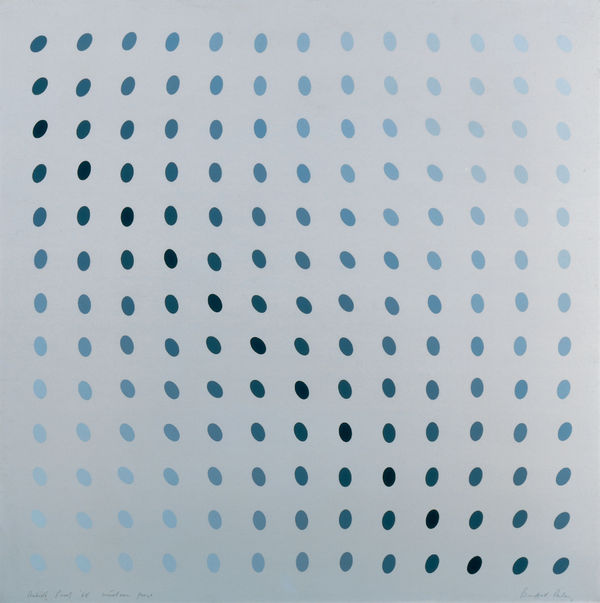
![Bridget Riley, Wall Painting 1 [Print] , 2007](https://static-assets.artlogic.net/w_600,c_limit,f_auto,fl_lossy,q_auto/artlogicstorage/leonie/images/view/03d68ba4d7a7caa22140a90b7575c9c9/julianpageprojects-bridget-riley-wall-painting-1-print-2007.jpg)


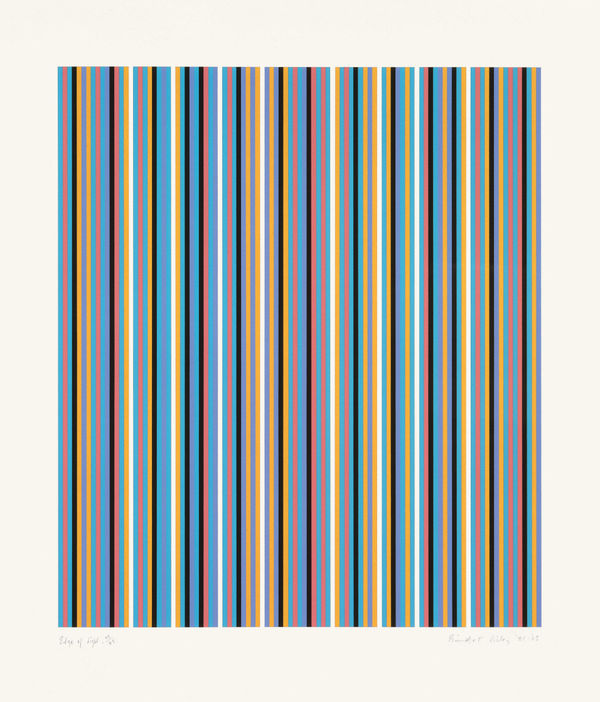
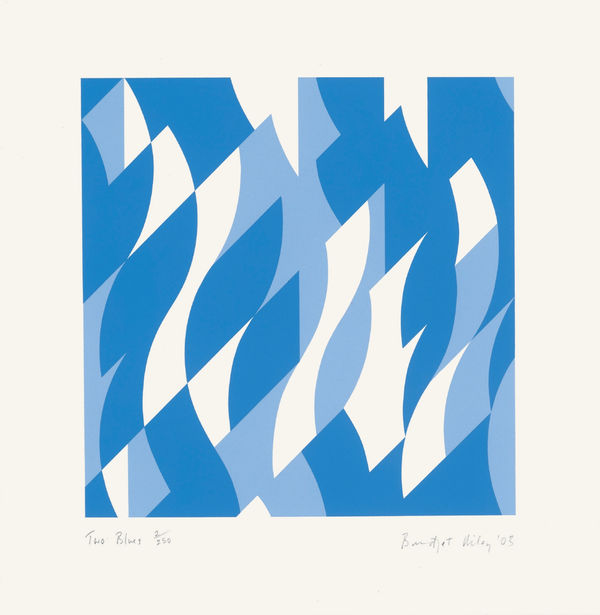





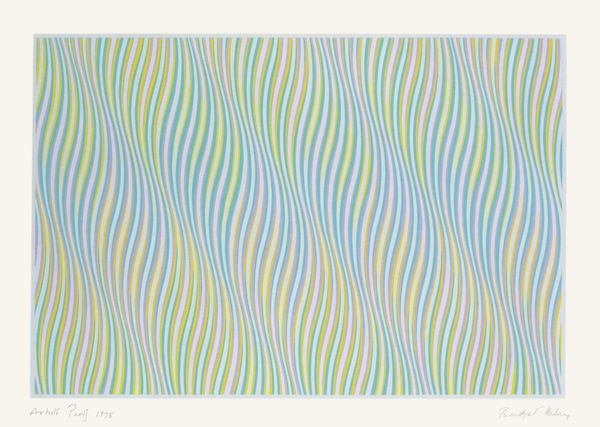


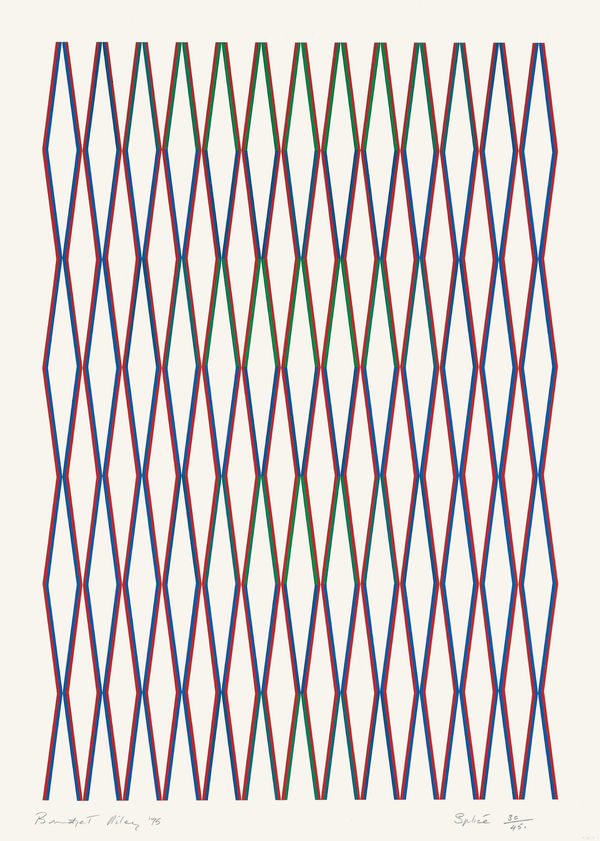
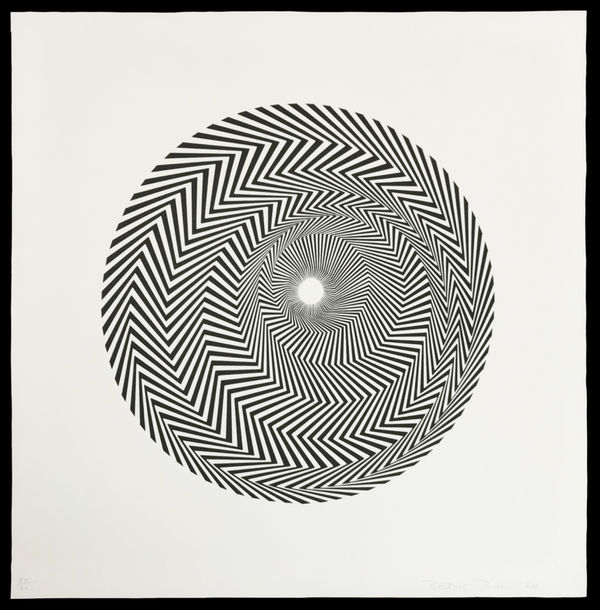
![Bridget Riley, Untitled [Wave] , 1975](https://static-assets.artlogic.net/w_600,c_limit,f_auto,fl_lossy,q_auto/artlogicstorage/leonie/images/view/beded551b0d1093a0454c92115ba1f50/julianpageprojects-bridget-riley-untitled-wave-1975.jpg)


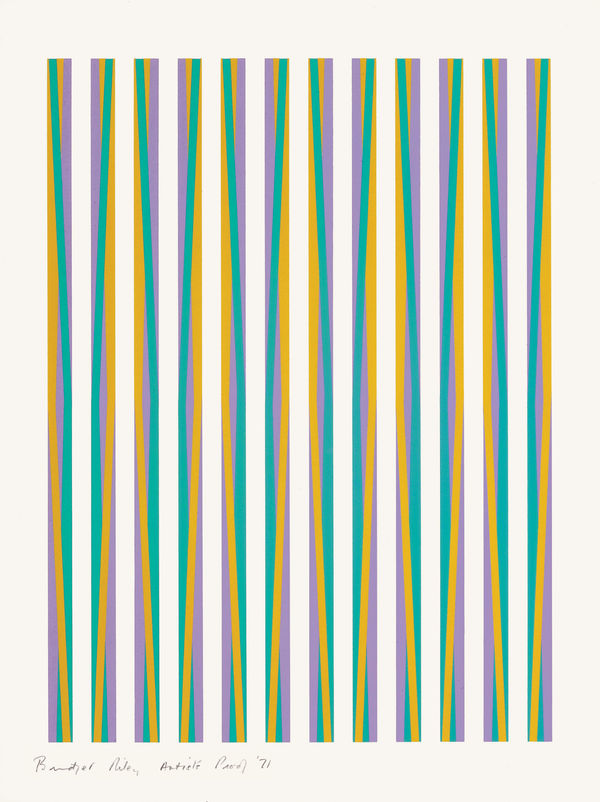

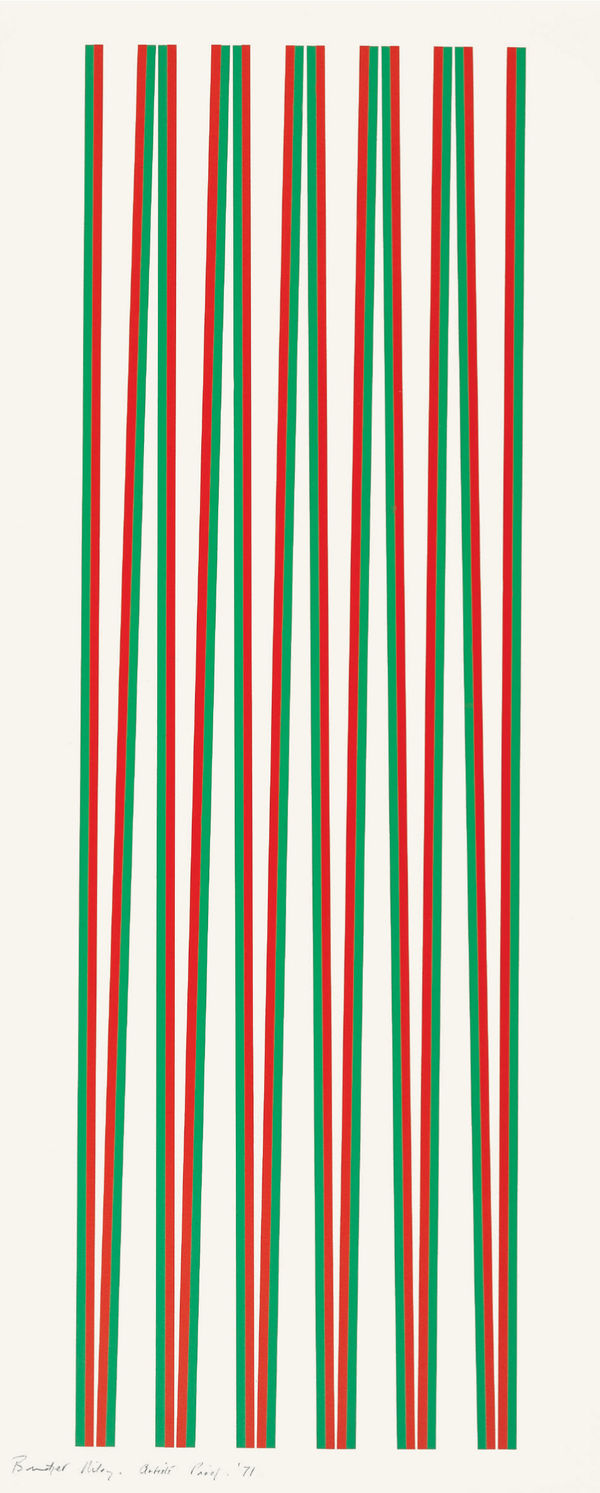

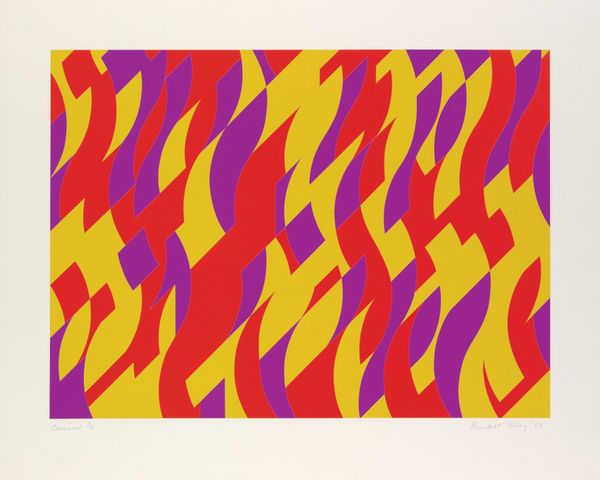
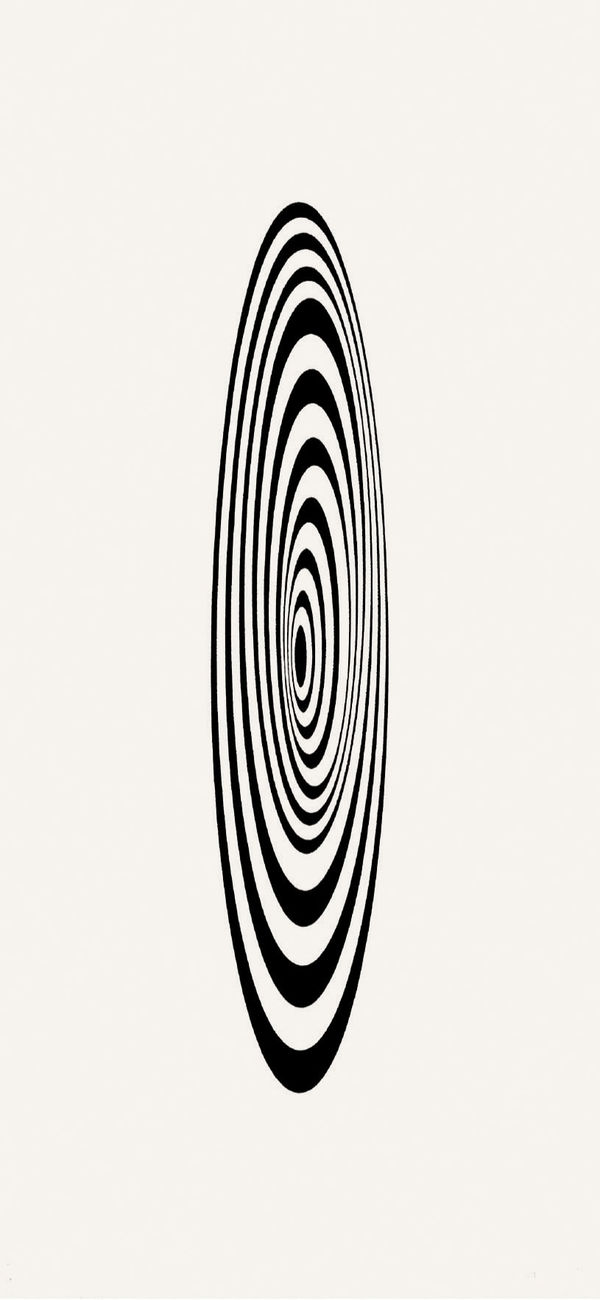
![Bridget Riley, Untitled [Elongated Triangles 1] , 1971](https://static-assets.artlogic.net/w_600,c_limit,f_auto,fl_lossy,q_auto/artlogicstorage/leonie/images/view/363743cd1c9c613e94342595c6ac8df8/julianpageprojects-bridget-riley-untitled-elongated-triangles-1-1971.jpg)
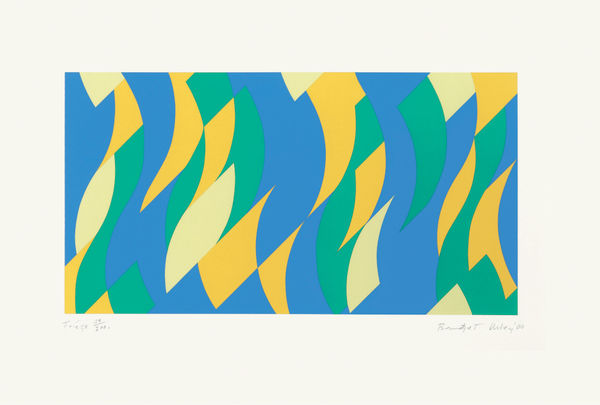
![Bridget Riley, Untitled [Elongated Triangles 4] , 1971](https://static-assets.artlogic.net/w_600,c_limit,f_auto,fl_lossy,q_auto/artlogicstorage/leonie/images/view/7ec83f133f510e5d39e2c3c2fc27069f/julianpageprojects-bridget-riley-untitled-elongated-triangles-4-1971.jpg)
![Bridget Riley, Untitled [Elongated Triangles 5] , 1971](https://static-assets.artlogic.net/w_600,c_limit,f_auto,fl_lossy,q_auto/artlogicstorage/leonie/images/view/f3ea86d107b7ae463e25afbef751377e/julianpageprojects-bridget-riley-untitled-elongated-triangles-5-1971.jpg)
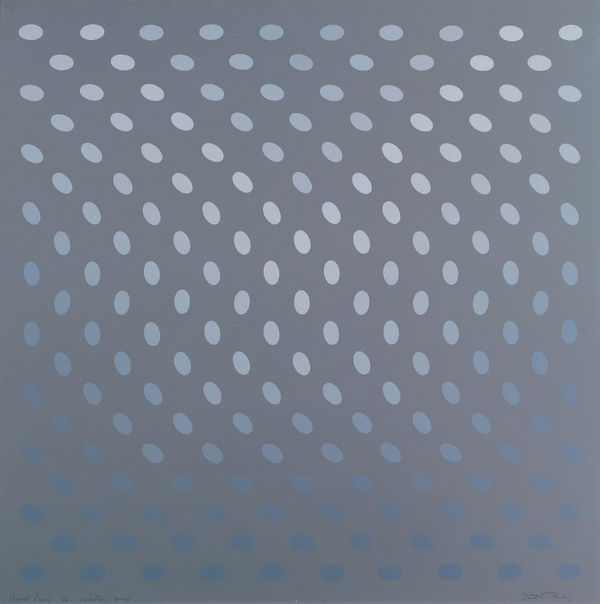





Julian Page has worked with Bridget Riley since 2008.
Bridget Riley (born 24 April 1931) is one of the most significant figures in postwar British art and a central pioneer of Op Art. Internationally celebrated for her dynamic, perceptually charged abstractions, Riley has spent more than six decades investigating the interaction of line, color, and form. Her work challenges the stability of vision itself, creating optical sensations that seem to shimmer, pulse, vibrate, and shift before the viewer’s eyes. Through a disciplined yet continually evolving practice, she has redefined the possibilities of abstraction in contemporary painting.
Riley was born in London and spent part of her childhood in Cornwall, where the coastal landscape left a lasting impression on her sensitivity to light and rhythm. She studied at the Goldsmiths College from 1949 to 1952 and then at the Royal College of Art from 1952 to 1955. At the Royal College, she received a rigorous academic training grounded in observation and traditional painting techniques. Although she began her career producing figurative and Impressionist-influenced works, she soon moved toward abstraction, seeking a visual language that could convey sensation rather than depiction.
In the late 1950s and early 1960s, Riley embarked on a radical exploration of black-and-white geometric abstraction. Influenced in part by the structural clarity of Georges Seurat’s Pointillism, she analyzed how small visual units could generate powerful perceptual effects. Works such as Movement in Squares (1961) use repeated shapes—often simple curves, lines, or checkerboard grids—systematically altered across the canvas. These subtle progressions create dramatic visual disturbances: surfaces appear to bulge, tilt, or ripple, though the canvas itself remains flat. Rather than representing motion, Riley’s paintings produce it optically, engaging the viewer’s retina as an active participant.
Riley rose to international prominence in 1965 when her work was included in “The Responsive Eye” at the Museum of Modern Art in New York. The exhibition brought widespread attention to Op Art, and Riley quickly became associated with the movement. However, she has often resisted labels, emphasizing that her interest lies not in visual tricks but in the fundamental experience of seeing. For Riley, painting is a means of investigating perception—how the eye organizes patterns, how contrast generates energy, and how color relationships can destabilize spatial certainty.
By the mid-1960s, Riley introduced color into her work, marking a significant shift in her practice. Initially cautious, she developed a highly controlled palette, carefully testing combinations to achieve precise visual effects. Her stripe paintings of the late 1960s and 1970s feature vertical bands of varying widths and hues arranged in rhythmic sequences. These works are less overtly disorienting than her early black-and-white pieces but equally complex. Colors appear to advance or recede, interact, and oscillate, creating a sense of internal movement and luminosity. Riley’s understanding of color owes much to her close study of artists such as Henri Matisse, yet her results are entirely distinct: cool, analytical, and structurally rigorous.
Throughout her career, Riley has maintained a methodical working process. She typically produces detailed studies and color trials before executing a final canvas, often working with assistants to achieve the immaculate surfaces for which her paintings are known. Despite their apparent simplicity, her works are the result of painstaking experimentation. Each painting is a carefully calibrated system in which even slight deviations can alter the overall perceptual effect.
Riley’s achievements have been widely recognized. In 1968 she became the first woman to win the International Prize for Painting at the Venice Biennale. She was appointed a Commander of the Order of the British Empire (CBE) in 1974 and later received the prestigious Praemium Imperiale for painting in 2003. Over the decades, her work has been exhibited globally and is held in major museum collections, cementing her reputation as one of the leading painters of her generation.
Beyond her studio practice, Riley has been an influential advocate for artists’ rights, particularly in the area of copyright protection. Her early experiences with unauthorized commercial reproductions of her imagery heightened her awareness of the challenges facing artists in a rapidly expanding visual culture.
Now in her nineties, Bridget Riley continues to produce new work, demonstrating an enduring commitment to inquiry and innovation. Recent paintings often revisit and refine earlier concerns—exploring diagonal formats, curved bands, and nuanced color progressions—while maintaining the clarity and intensity that define her oeuvre. Her art remains rooted in a simple yet profound proposition: that painting, through the arrangement of lines and colors on a flat surface, can generate experiences that are at once physical, emotional, and intellectual.
Bridget Riley’s legacy lies not only in her role as a pioneer of Op Art but in her sustained investigation of perception as a living, dynamic process. By transforming the act of looking into an active encounter, she has expanded the language of abstraction and reshaped our understanding of what painting can do.
Riley’s breakthrough came in the early 1960s with her first black-and-white paintings, which created flickering, destabilising effects through the use of repeated geometric units — lines, waves, and diagonals that appeared to pulse or shift under the viewer’s gaze. Works such as Fall (1963) and Movement in Squares (1961) established her reputation as a pioneer in the systematic exploration of visual instability. She rejected the idea that her work was simply “optical trickery,” insisting instead that her paintings were rooted in close observation and an almost musical structuring of visual intervals.
Her inclusion in MoMA’s landmark exhibition The Responsive Eye (1965) brought international attention, though Riley’s reception in the United States was complicated by the unauthorised commercial appropriation of her motifs by the fashion industry. Maintaining strict control over her work, she continued throughout the 1960s and 70s to refine her approach to composition and perception. By the late 1960s, colour became central to her practice. Inspired by the light and environment of Italy and by her study of Seurat’s colour theories, Riley introduced meticulously calibrated chromatic sequences that produced shimmering, almost phosphorescent effects. The Stripe and Curve series exemplify her ability to create a sensation of rhythm and spatial expansion using only the interactions of hue and tone.
Riley’s working process is famously disciplined. She develops each painting through extensive studies, paper collages, and full-scale wall diagrams produced with the assistance of long-term studio collaborators. While she embraces precision, her work is not mechanical: the paintings depend on subtle decisions about interval, adjacency, and proportion — adjustments Riley makes with the eye of a painter deeply attuned to the behaviour of colour in space.
Riley’s exhibitions have been central to major institutions worldwide, including solo shows at the Serpentine Gallery, Tate Britain (including her celebrated 2003 retrospective), the National Gallery, the Hayward Gallery, and the Art Institute of Chicago. She represented Britain at the Venice Biennale in 1968, where she was awarded the International Prize for Painting, one of the most significant recognitions of her career. Her work is held in leading museum collections globally, including Tate, MoMA, the Centre Pompidou, the Hirshhorn, and the Stedelijk.
Beyond her visual achievements, Riley has shaped British art through her articulate writing on perception, her support for younger artists, and her role in sustaining the legacy of modernist abstraction. Her paintings — simultaneously serene and electric — continue to expand the language of visual experience, making Riley one of the most enduring and innovative abstractionists of the past century.
-

London Art Fair 2026, January 20 - 25
20 - 25 Jan 2026Stand 39, Mezzanine London Art Fair, January 20 - 25 Business Design Centre, 52 Upper Street, London, N1 0QH I am delighted to be exhibiting...Read more -
London Original Print Fair 2025, March 20 - 23
16 - 24 Mar 2025Booth W7 London Original Print Fair Somerset House, London, WC2R 1LA 19 March: Private View (by invitation only) 20 – 23 March: Open to the...Read more -

London Art Fair 2025, January 21 - 26
Business Design Centre, 52 Upper Street, London, N1 0QH 21 - 26 Jan 2025London Art Fair, January 21 - 26 Business Design Centre, 52 Upper Street, London, N1 0QH I am delighted to be exhibiting again at the...Read more -

Woolwich Contemporary Print Fair 2024
20 - 24 Nov 2024Woolwich Contemporary Print Fair November 21 - 24 (PV November 20) Woolwich Works , The Fireworks Factory, 11 No. 1 Street, London, SE18 6HD I...Read more -

British Art Fair 2024
September 26-29: Saatchi Gallery, London 26 - 29 Sep 2024Saatchi Gallery, Kings Road, London, SW3 4RY I am delighted to be exhibiting again at the British Art Fair, on the same stand (21 )...Read more -
Eye of the Collector 2024, June 26-29
The Garrison Chapel, Chelsea Barracks, London, SW1W 8BG 26 - 29 Jun 2024I am delighted to be exhibiting for the first time at Eye of the Collector next month in its new location: The Garrison Chapel, Chelsea...Read more -
London Original Print Fair 2024, March 21 - 24
21 - 24 Mar 2024London Original Print Fair, March 21 - 24 Stand W7, West Wing, Somerset House , Strand, London, WC2R 1LA I am delighted to be exhibiting...Read more -

Extended: Present - Past at Brun Fine Art
February 1 - 29 by appointment only 1 - 29 Feb 2024Present - Past at Brun Fine Art 38 Old Bond St, London W1S 4QW Nox extended, with some new artworks on display. February 1-29 by...Read more -

London Art Fair 2024
17 - 21 Jan 2024I am delighted to be back exhibiting at the 2024 London Art Fair . 'We believe that great art provides a lens to see the...Read more -

Present - Past, Group Show at Brun Fine Art London
9 - 26 Jan 2024Present - Past at Brun Fine Art 38 Old Bond St, London W1S 4QW December 6 – 22; January 9 - 26 Tuesday to Friday,...Read more -

Woolwich Contemporary Print Fair 2023
Woolwich Contemporary Print Fair, Woolwich Works, The Fireworks Factory, No. 1 St, London, SE18 6HD 26 - 29 Oct 2023I am delighted to be exhibiting at the Woolwich Contemporary Print Fair 2023, showing works by: Marcelle Hanselaar Kate McCrickard Alexander Massouras Bridget Riley James...Read more -
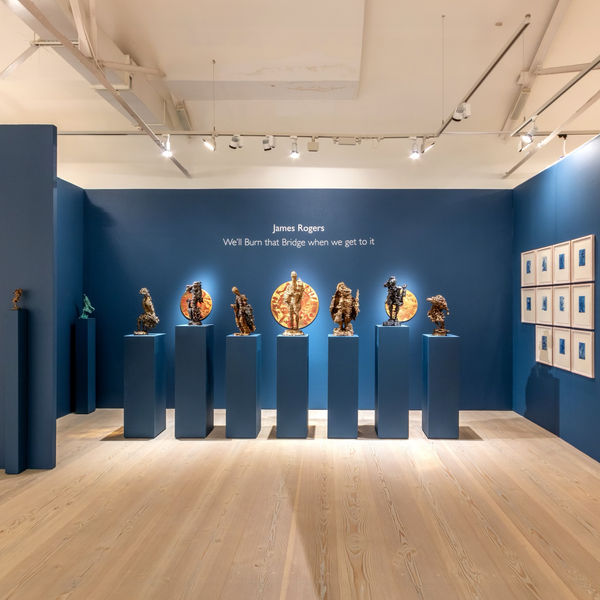
British Art Fair 2023
British Art Fair, Saatchi Gallery, Kings Road, London, SW3 4RY 28 Sep - 1 Oct 2023British Art Fair, September 28 - October 1 Saatchi Gallery, Kings Road, London, SW3 4RY I am delighted to be exhibiting again at the British...Read more -
London Art Fair 2023
17 - 22 Jan 2023I am delighted to be back exhibiting at the 2022 London Art Fair . 'We believe that great art provides a lens to see the...Read more -

British Art Fair 2022
British Art Fair, Saatchi Gallery, Sep 29 - Oct 2 29 Sep - 2 Oct 2022I am delighted to be exhibiting for the first time at the British Art Fair at the Saatchi Gallery this September/October. I will be on...Read more -

London Original Print Fair 2022
W6, West Wing, Somerset House 26 - 29 May 2022I am delighted to be exhibiting at the 37th edition of the London Original Print Fair in its new location at Somerset House . I...Read more -

London Art Fair 2022
21 - 24 Apr 2022I am delighted to be back exhibiting at the 2022 London Art Fair . 'We believe that great art provides a lens to see the...Read more -

Woolwich Contemporary Print Fair 2021
Art Fair, November 11-14, 2021 11 - 14 Nov 2021I am delighted to be exhibiting at the 2021 Woolwich Contemporary Print Fair . I will be showing artwork by Victoria Burge, Marcelle Hanselaar, Kate...Read more -
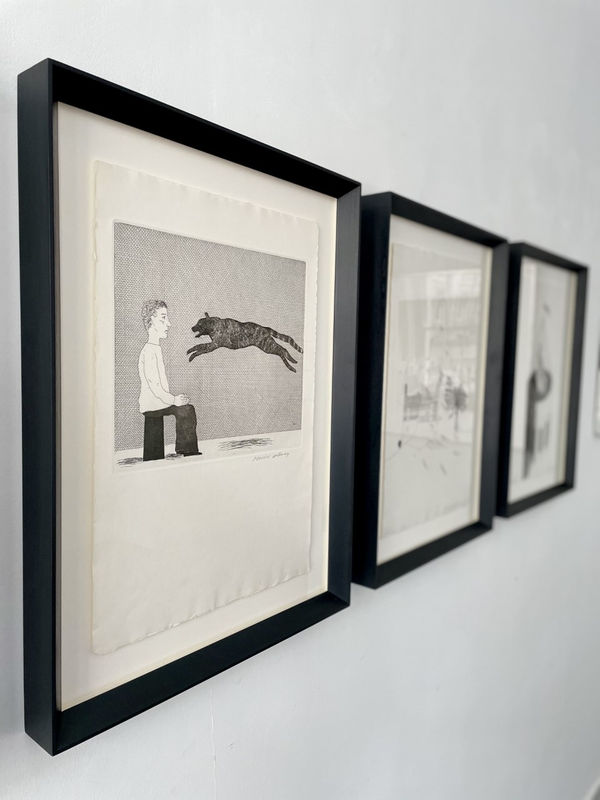
Prints & Fairy Tales: Austin / Desmond Fine Art & Julian Page, May 11-21
11 - 21 May 2021We will be extending our current exhibition Prints and Fairy Tales until 21 May. Curated in partnership with Austin Desmond, the show features a selection...Read more